Blog

Whipstick – an anthology

Excitingly, one of my short stories has been selected for inclusion in Whipstick, due for publication in August 2018.

Come along to the book launch in Bendigo on Friday 10 August, details below on the Bendigo Writer’s Festival website:

https://www.bendigowritersfestival.com.au/2018-program/whipstickbooklaunch

Thanks to the wonderful support of Mark Brandi, author of Wimmera and the other participants, Wendy Bridges, Mary Pomfret, Bridget Robertson and Jennifer Walker Teh.

An Ode to O’Toole

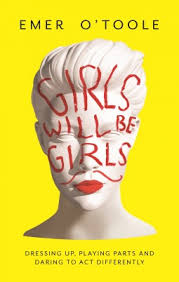
Girls will be girls

Girls Will Be Girls – Emer O’Toole

O’Toole with sincerity and wit, about a topic it is all too easy to dismiss. She discusses body issues like female body hair, fake tans, boob jobs, boobs with brave honesty. She dares these things to be trivial, and proves that they are not. We should not dismiss these so called ‘women’s issues’ lightly, or sneer at our counterparts for engaging in socially conditioned high maintenance grooming, nor should we judge those who choose not to participate.

The structure vs. agency debate that Emer points to throughout is not new, but the way she uses it to dissect the issues she confronts is a thing of precision. It becomes at once obvious to the reader that much of our assumptions about our female identity has been curtailed to support male privilege. The agency theory is an important tool for neo-liberalism as it states that the individual is free to choose. But are they free to choose in a society which so strictly defines the role of its players, by class, race and gender?

Emer’s argument becomes a double edged sword, the same weapon that feminists have been grappling with for decades. On one hand, women must be free to choose their lives if there is to be equality, however this comes at the high price of challenging the structure in place that rewards conformity and punishes the non-conformist, thus making freedom to truly choose a new form of suffering.

 

Psychoanalysis: The Impossible Profession – Janet Malcolm

This book was unsuspectingly well written. Great prose that reverberated with a feel for its subject.
This haunting extract from the penultimate page of the novel:

“At the end of A Midsummer Night’s Dream, the human characters wake up and rub their eyes and aren’t sure what has happened to them. They have a feeling that a great deal has occurred – that things have somehow changed for the better, but they don’t know what caused the change. Analysis is like that for many patients.”

– central psychoanalyst Aaron Greenwood’s summation of his profession’s impact on patients.

The act of transference has been touched on throughout the book, which I wish to investigate further. Work on narcissist and borderline personalities is discussed with a general conclusion that these personalities are too difficult to analyse.
Interesting discussion on repressed memories, abreaction (in the old language of the Master, Freud) and the imperfect healing process. This book was first published in 1981. It would be interesting to see an updated look at psychoanalysis undertaken with the same sensitivity.
A short discussion on the implications of the stuttering and mutterings of patients in analysis for the hidden content and meaning, research conducted by Hartvig Dahl, approx page 84-85. This shows promise as I intuit it when writing, that there is something going on in the words I put in my character’s mouths that seem inauthentic. Perhaps this alludes to a solution.

A reading of Point Counter Point

p1010223

Warning: Spoilers ahead

On the back cover it says this book is chiefly based on a period in Huxley’s life when he lived in Italy. I suppose he is the character of Phillip Quarles, who has a game leg and was excluded from the war, much as Huxley was. After this I will go read it up on Wikipedia.

The book meanders through a quagmire of literary, artistic and political opinions of a group of friends, much under the influence of Rampion, who they all seem to gravitate to and make attempts to prove to him their own silly versions of reality. The book ends in death. The killing of a man that is made to be silly and disgusting, for his political ideas, and the death of a small boy, in much pain. There is also a lot of adultery in the book, as a matter of course for nearly all the characters. The men seem not much tortured by the thought of betraying their spouses, and this is counter balanced by the feelings of Elinor, who thinks of running away with the murdered man, but was tortured by the thought of leaving her husband, who she really loved despite his coldness. The other counterbalance being Lucy Tantamount, who is a crocodilian, antediluvian creature free of the morass of the moral kingdom, and devours her lovers as individually wrapped delicacies provided for her enjoyment only.